Beaver supermoon: the full Moon peaks at 14:53 GMT on Tuesday, 360,768 km from Earth
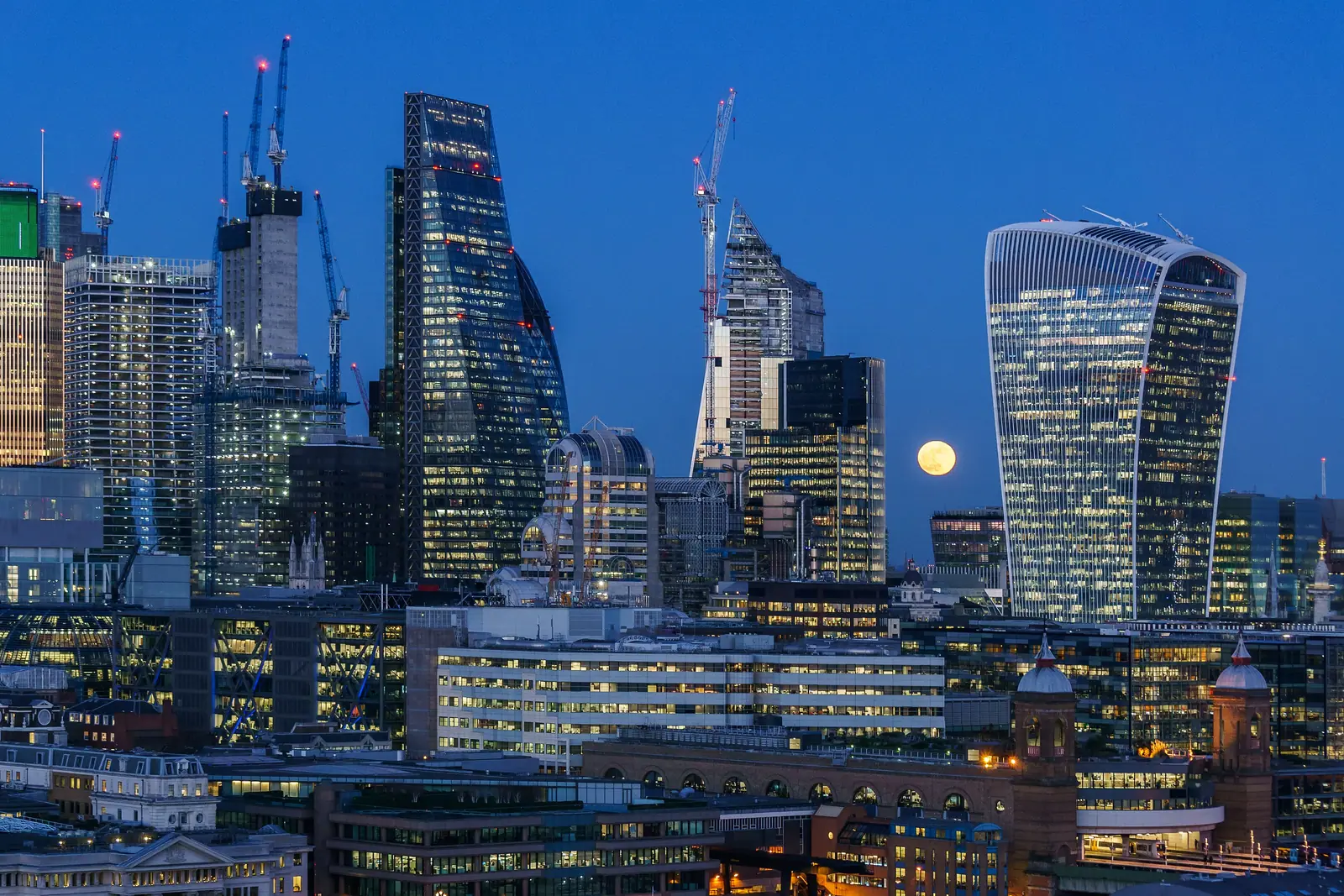
The full phase came while the Moon was still below the horizon in Portugal, where it rises in the late afternoon. At 360,768 km it earns the name, but the difference from an ordinary full Moon is barely noticeable.
Key points
- November’s full Moon fell at 14:53 GMT on Tuesday 24 November, and it is a supermoon: the Moon was 360,768 km from Earth, below the average distance.
- The Moon rises at about 16:55 in Lisbon and Faro and 16:45 in Porto, according to Pplware; NASA’s Horizons system gives the same times to within a minute.
- Compared with a full Moon at average distance it looks about 6.5% larger and 13.5% brighter; to the naked eye the difference is hard to see.
- Portugal’s weather service, IPMA, forecasts showers or rain in every mainland district capital on Tuesday.
- NASA counts three supermoons in a row, to January 2027; some lists add February’s. The next is on 24 December.
November’s full Moon fell at 14:53 GMT on Tuesday 24 November, 360,768 kilometres from Earth. It is a supermoon: the full phase coincides with the part of the orbit where the Moon is closest to us. The difference from an ordinary full Moon is small.
In Portugal it can be seen only from late afternoon, when it rises, and only if the clouds allow: the national weather service, IPMA, forecasts showers or rain in every district capital on the mainland.
When the Moon rises in Portugal
The full phase came at 14:53 in mainland Portugal, according to the Portuguese site Pplware (opens in a new tab). Space.com (opens in a new tab) gives the same time in GMT, which in November is also the time in Lisbon and London; mainland Spain is an hour ahead. At that moment the Moon was still below the horizon in Portugal.
Pplware puts moonrise at about 16:55 in Lisbon and Faro and about 16:45 in Porto. NASA’s Horizons ephemeris system (opens in a new tab) gives very similar values: 16:55 in Lisbon, 16:44 in Porto and 16:56 in Faro. It gives 17:47 for Funchal, in Madeira, and 17:07 local time for Ponta Delgada, in the Azores.
The Moon appears in the north-east, about 23 minutes before sunset, which in Lisbon is at 17:18, and does not set until 08:42 on Wednesday. The times assume a flat horizon; buildings and hills delay the moment it comes into view.
On the nights of 23 and 25 November the Moon also looks practically full, Pplware notes.
Why it is called a supermoon
“Supermoon” is a popular label, not a formal astronomical term, National Geographic (opens in a new tab) points out. Because the Moon’s orbit is an ellipse, its distance from Earth varies during each orbit; the nearest point is called perigee. According to the same magazine, NASA uses the word for a full Moon that comes within at least 90% of perigee.
This full Moon is 360,768 kilometres away, according to the list compiled by astronomer Fred Espenak and reproduced by Space.com. Horizons gives 360,765. This month’s perigee does not come until Wednesday 25 November, shortly after 21:00 GMT, at about 359,340 kilometres, according to the same system. The full Moon and perigee are therefore about 30 hours apart.
The average distance is 384,400 kilometres for Pplware and 382,900 for Space.com. Dividing 384,400 by 360,768 gives 1.0655: the Moon looks about 6.5% larger than a full Moon at average distance, and its brightness, which varies with the inverse square of the distance, rises by about 13.5%. Those are the figures Pplware gives.
The 14% in size and 30% in brightness often quoted, which Pplware attributes to NASA, compare a supermoon with a full Moon at the opposite extreme of the orbit, apogee. Sky at Night Magazine (opens in a new tab) says nobody could tell a supermoon apart, without instruments, from the full Moon a month earlier or later.
Why it is the Beaver Moon
“Beaver Moon” is the traditional name for the November full Moon. It is linked to the time when beavers reinforce their lodges and food stores for winter, Pplware explains. It is a seasonal name and says nothing about how the Moon looks.
How many supermoons come in a row
The published counts do not all match, partly because they count different things:
- Space.com and Sky at Night Magazine count the calendar year: three in 2026, on 3 January, 24 November and 24 December. This is the second.
- NASA (opens in a new tab) and National Geographic count the series: three in a row, from November to January. This is the first.
- Pplware, citing Space.com, speaks of four in a row, to February 2027, and admits the last counts only under certain definitions.
The doubt is only about February. The next full Moon, on 24 December, is 356,740 kilometres away, the closest of the three in 2026 on Space.com’s list. For the ones after that, a Lyntev News calculation with the astronomy program PyEphem gives about 357,600 kilometres on 22 January 2027 and 363,300 on 20 February. The last figure is greater than the 362,312 kilometres of the 3 January 2026 full Moon, which Space.com includes in its list: whether it counts as a supermoon depends on the threshold chosen.
How to see the supermoon and what is near it
No instruments are needed. One of the best moments, Pplware says, is moonrise, from a spot with a clear view to the east, away from buildings and trees. Near the horizon the Moon looks bigger and may turn orange. The enlargement is an illusion and the colour comes from the way light crosses the atmosphere: the Moon is no closer at that moment.
The Moon passes near two star clusters in Taurus, the Pleiades and the Hyades. The Pleiades can be seen with the naked eye in good conditions, but the glare of the full Moon drowns the fainter stars, in which case binoculars help, according to Pplware.
What could spoil the view
It comes down to the clouds. IPMA’s forecast (opens in a new tab) for Tuesday, updated at 15:31, shows showers or rain in every district capital on the Portuguese mainland. Over the day, the chance of precipitation is 100% in Lisbon and Porto and 51% in Faro. Ponta Delgada is forecast to have partly cloudy skies and no precipitation. For Wednesday, IPMA shows mostly clear skies in Faro and light showers in Lisbon and Porto.
Corrections
. The article said the Moon’s brightness varies with the square of the distance. It varies with the inverse square: the closer the Moon, the brighter it looks; the figures do not change.
Sources
Documents and reporting consulted for this story.
- Superlua do Castor chega esta terça-feira: quando e como observar em Portugal (opens in a new tab)Pplware, . Accessed 24 November 2026
- What Is a Supermoon? (opens in a new tab)Space.com, . Accessed 24 November 2026
- What's Up: November 2026 Skywatching Tips from NASA (opens in a new tab)NASA, . Primary source. Accessed 24 November 2026
- A Spectacular Streak of Supermoons Is About to Begin (opens in a new tab)National Geographic, . Accessed 24 November 2026
- We'll get three supermoons in 2026. Here's how to see them all (opens in a new tab)BBC Sky at Night Magazine, . Accessed 24 November 2026
- Horizons System (opens in a new tab)NASA / Jet Propulsion Laboratory, . Primary source. Accessed 24 November 2026
- Previsão meteorológica diária por local, 24 de novembro de 2026 (opens in a new tab)IPMA, . Primary source. Accessed 24 November 2026
Topics

Written by
Wellinton OliveiraCEO of Lyntev
Technology with context, original analysis and sources you can consult.