Arion Kurtaj, the GTA VI leaker, is sentenced to seven years and freed the same day
Kurtaj admitted attacks on Rockstar, Uber, Revolut and BT/EE. Woolwich Crown Court in London decided that the time he had already spent in detention was enough.

Tuesday, 24 November 2026
Attacks, flaws, fixes and data protection: what happened, who is affected and what to do.
Kurtaj admitted attacks on Rockstar, Uber, Revolut and BT/EE. Woolwich Crown Court in London decided that the time he had already spent in detention was enough.

The flaw affects versions 5.4.0 and earlier and can be exploited without a password. Danfoss does not yet have a fix and says the equipment should not be exposed to the internet.
The company names four types of data and says there are no contact details or cards. It does not say when it detected the attack or how many customers were hit.
The attack hit Korea Electric Power's customer portal and its procurement platform. South Korea's regulator has opened an inquiry and the company has not said how the attacker got in.
A flaw in the Entra Connect Health API, present since 23 July, gave intruders access to contact and configuration data for each organisation notified. Microsoft says it found no changes and that no passwords were exposed.
The prosecution says the former engineer kept recordings of company meetings, at least one with representatives of a foreign government. What he did with the files “remains under investigation”, prosecutors write.
The Seville operation targeted the money behind pirate television services, often paid in cryptocurrency. Portuguese officers took part, but published accounts mention no arrests.
The flaw, scored 9.8, needs no user interaction and affects Android 14 to 17. Google published the fix three weeks ago, but delivery depends on each phone’s manufacturer.
According to the British agency, what has changed is the speed and persistence of the attackers, at low cost. The tools are common and, for now, easy to detect; defence still depends on the basics.
The flaw was found while N-able investigated an attack on its email-filtering service. The deadline binds only US federal agencies, and how the attackers got in is still unexplained.
The attacker had persistent access, GreyNoise says, and used a flaw patched in July. How it reached the servers, and whether victims had installed the fix, is unknown; Portugal is not on the list.
The new flaw, CVE-2026-123903, bypasses vCenter authentication, and the advisory mentions no attacks. The previous one, CVE-2026-123890, has been used since September by a suspected China-linked espionage group, according to Google.
The agents failed for 16 hours against a Redis server and took 11 minutes to reach file writes in a medical imaging application. Amazon has high confidence that the flaw was unknown and moderate confidence in the China link.
Wired’s total adds 1.64 billion documents from a China-focused database to about 2 billion credentials from another, unrelated one. Who owned them and how many distinct people they contain is not known.
The company, which handles online purchases and subscriptions for other businesses, detected the access on 4 November and began warning those affected on 20 November. In a minority of cases the data included the card’s security code.
Okta concludes that the O-UNC-053 group has “very likely” changed its brand while keeping its methods. The new site lists seven companies, none has confirmed an attack and Okta cannot say whether the data is authentic.
The three advisories, dated 23 November, affect the platform hosting companies use to bill and support customers. One flaw needs no account; another, rated critical, lets a client run code on the server.
Elecbrakes trailer brake controllers accepted commands from any device within Bluetooth range. CISA, the US cybersecurity agency, published its advisory on 19 November; the oldest model still has no fix.
AI labs are bolstering security with former intelligence officers. At OpenAI, an engineer accused of hiding a recorder has pleaded not guilty, and prosecutors say they are not aware of any evidence of espionage.
Cisco fixed the flaw in October, but the US cybersecurity agency now lists it among those exploited in real attacks. Cisco says it has no direct evidence, while the firm F6 describes an intrusion.
Microsoft closed the access path on 19 November but warns that this does not invalidate credentials already copied. Norway’s security authority is telling customers to replace them.
The learning platform has been switched off and users were told only through a notice on its website. The Commission does not yet know how many people are affected and will not say whether the intrusion is over.
The agency says it is preparing to restore the system by alternative means and that certificates already issued remain valid. It is still unknown whether personal data was accessed.
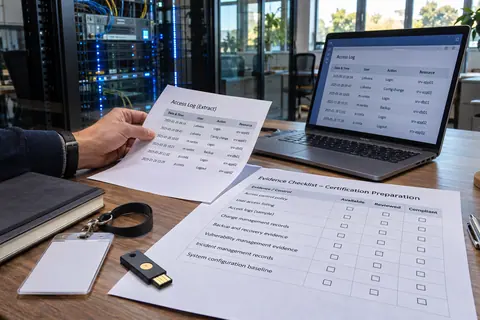
Businesses have an opportunity to discuss how organisational security is demonstrated. The starting point is the proposal, rather than assumptions about final rules.
Lyntev uses technical storage to remember this choice and provide the services you request.
Essential storage keeps the website working. Your choice is valid for six months. Read the cookie policy.