US data centres are building their own gas power plants rather than wait for the grid
Developers want to get online quickly and will pay more for a plant of their own, but estimates point to more emissions than with the grid. The US environmental agency says that, if off the grid, such plants fall outside its Acid Rain Program.
Key points
- By October 2026 more than 100 gas plants for data centres had been announced in the US, with over 115 gigawatts (GW), according to Cleanview; only a small share is under construction or operating.
- Speed is the main reason: a grid connection can take up to a decade, and developers will pay a premium for a plant of their own.
- If every planned plant in the US goes ahead, they could emit 345 million tonnes of CO2 equivalent a year by 2035, which is 152 million more than if the data centres used the grid, BloombergNEF calculates.
- In July the US Environmental Protection Agency (EPA) said the Acid Rain Program does not apply to plants cut off from the grid; Wired shows that Williams, a Meta supplier, asked for that guidance.
- Musfika Mishi of BloombergNEF sees a risk that plants described as temporary will stay in use for much longer; Matthias Fripp of Energy Innovation says leaving the grid does not protect prices for other consumers.
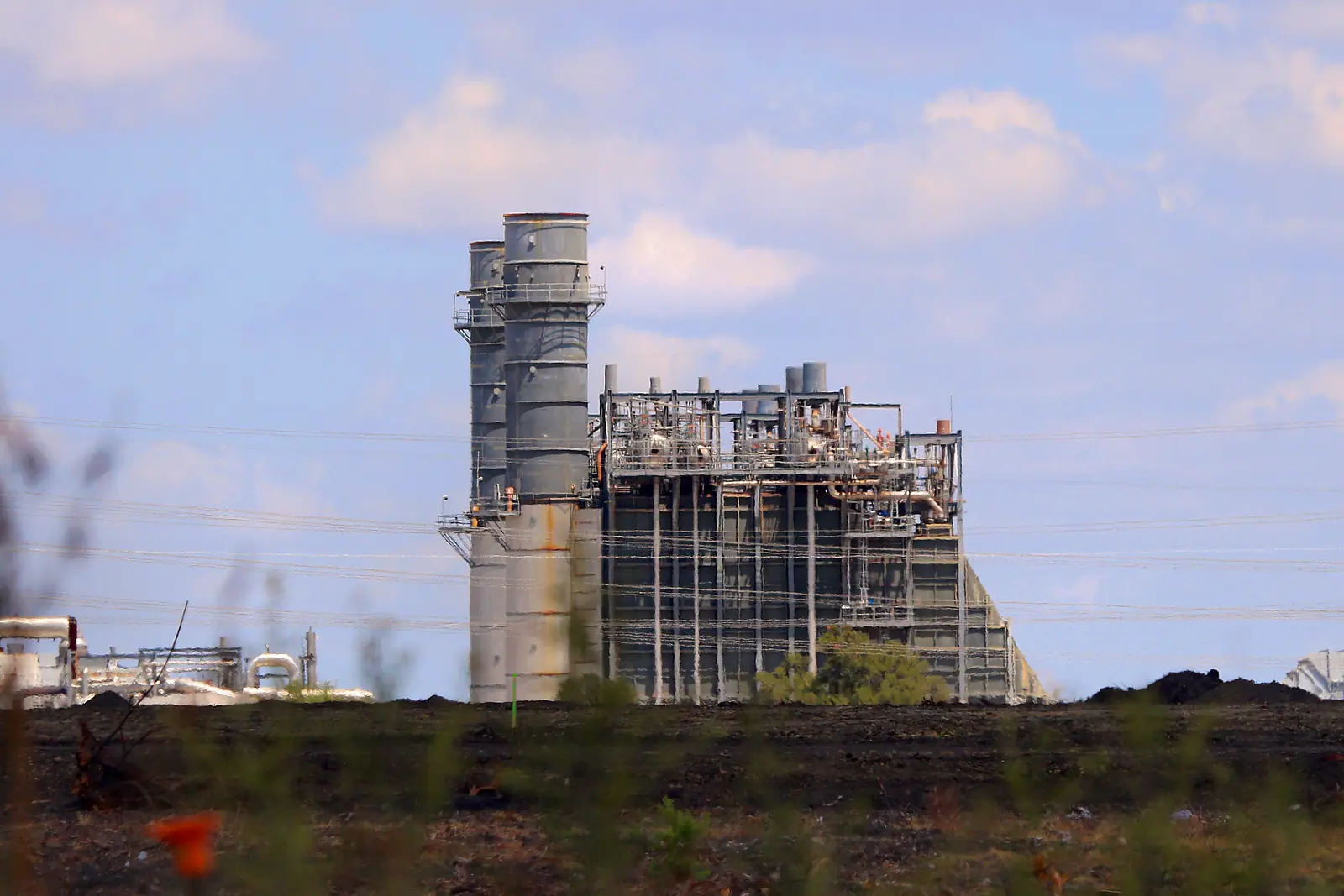
Developers of data centres for artificial intelligence in the United States are building their own natural gas power plants instead of waiting for a connection to the electricity grid. According to MIT Technology Review (opens in a new tab), citing data from the market-intelligence company Cleanview, more than 100 such plants had been announced by October, with a combined capacity of over 115 gigawatts (GW). Only a small share is operating or under construction.
What “behind the meter” plants are
A “behind the meter” plant sits on the customer’s side of the utility meter: it supplies the building directly and does not depend on the public grid. Some are isolated; others end up connecting to the grid and serve only as back-up.
The main reason is time. To connect a facility that uses a lot of electricity, the developer asks the local utility or grid operator for a connection. A process lasting years follows, in which grid planners study what has to be built, such as new transmission lines or larger transformers, and the developer may have to help pay for it. MIT Technology Review writes that the wait can stretch to a decade.
A private plant usually costs more than a grid connection, but developers are willing to pay a premium to start up sooner. Musfika Mishi, an analyst at BloombergNEF, tells the magazine that speed is the main motive.
More emissions than the grid
BloombergNEF calculates that if every planned plant in the US goes ahead, they could emit 345 million tonnes of CO2 equivalent a year by 2035. That is 152 million tonnes more than if the same data centres drew their power from the grid, a gap bigger than the Netherlands’ total annual emissions, according to MIT Technology Review.
The US grid still relies on fossil fuels, but nuclear and renewables together already supply about 40% of the electricity generated. A grid connection therefore usually means lower emissions than relying only on an on-site gas plant. The magazine notes that this does not hold everywhere: India’s grid is largely served by coal.
Large gas plants normally use combined-cycle turbines, which capture heat to generate more electricity. Mishi says very few of the planned plants will use them, at a time when manufacturers cannot keep up with demand. These plants are therefore likely to emit more greenhouse gases than other gas plants.
Stop-gap or lasting dependence
Brendan Pierpont, who leads electricity work at the think tank Energy Innovation, calls these plants a very costly way of covering the five to seven years before a grid connection arrives. Once the money has been spent on building them, the magazine notes, an operator might choose to keep running them. For Mishi, the likelihood of their being used for much longer is a real risk that leads to fossil fuel lock-in.
Matthias Fripp, also of Energy Innovation, argues that leaving the grid does not protect prices for everyone else. More demand for gas could push its price up, which would affect the American households that use it for heating and cooking, roughly 60% of the total. The effect could reach electricity prices too. According to the magazine, a study by Fripp’s team found that renewables with storage could be reliable and cheaper than fossil fuels in meeting rising demand.
The US environmental agency’s guidance
In July, the US Environmental Protection Agency (EPA) issued guidance on the Acid Rain Program, set up under the Clean Air Act. It says the programme does not apply to “islanded” plants, which neither sell electricity nor have to report to the Department of Energy. If such a plant is later connected to the grid, it may become subject to the programme (opens in a new tab), the EPA says.
According to Wired (opens in a new tab), documents obtained from the EPA show that Williams, a gas power supplier to several Meta data centres, was one of three companies that asked the agency for guidance. They also show that it met EPA officials. In a February letter to Utah’s environmental regulator, Williams wrote that regulatory uncertainty was creating obstacles to data centre development.
The company told Wired it wants to develop energy solutions that strengthen the US position in the artificial intelligence race while putting environmental protection first. Meta declined to comment. The EPA confirmed the Williams request and replied that its offices regularly meet stakeholders.
Joseph Goffman, a former head of the EPA’s air office, criticises the guidance but agrees with Carrie Jenks of Harvard University that it appears to follow the letter of the law. The programme, they argue, was designed for plants that sell power to the grid. The environmental groups Earthjustice and the Natural Resources Defense Council (NRDC) challenged the EPA’s reading in a letter in September.
Wired notes that the permit application for Williams’s Utah plant, for Meta, puts the maximum at about 100 US tons (roughly 91 tonnes) of nitrogen oxides a year. A 500-megawatt coal plant can emit thousands. Goffman’s concern is different: without the programme, regulators may lose emissions data, including those for CO2.
What is still unknown
It is not known how many of the announced plants will be built. MIT Technology Review cautions that only a fraction is under construction or running, but adds that the trend of large data centres producing their own power could shape the grid and the climate for decades. Among the projects Wired cites are a 7 GW Amazon plant in Texas and a 9.2 GW SoftBank plant in Ohio, which would be among the largest gas plants in the world.
Corrections
. The text attributed to Musfika Mishi the point that an operator may keep running the plants once the money is spent; it is MIT Technology Review’s. Goffman and Jenks say the guidance appears to follow the letter of the law, not that it does; and the 100 tons in Utah are US tons, about 91 tonnes.
Sources
Documents and reporting consulted for this story.
- Data centers are getting their own natural gas power plants (opens in a new tab)MIT Technology Review, . Accessed 24 November 2026
- A Power Provider for Meta Urged Regulators to Exempt Data Center Plants From Acid Rain Rules (opens in a new tab)Wired, . Accessed 24 November 2026
- EPA Issues Permitting Guidance to Further President Trump’s Agenda Promoting Data Centers and Safeguarding Communities (opens in a new tab)Agência de Proteção Ambiental dos EUA (EPA), . Primary source. Accessed 24 November 2026
Topics

Written by
Wellinton OliveiraCEO of Lyntev
Technology with context, original analysis and sources you can consult.