US jury finds Huawei guilty of fraud and trade secrets conspiracy, but not of racketeering
A New York jury convicted the company on 10 of 12 counts tied to Iran and to technology from American firms, and cleared it of racketeering conspiracy. Huawei rejects the convictions; the penalty will be decided later.
Key points
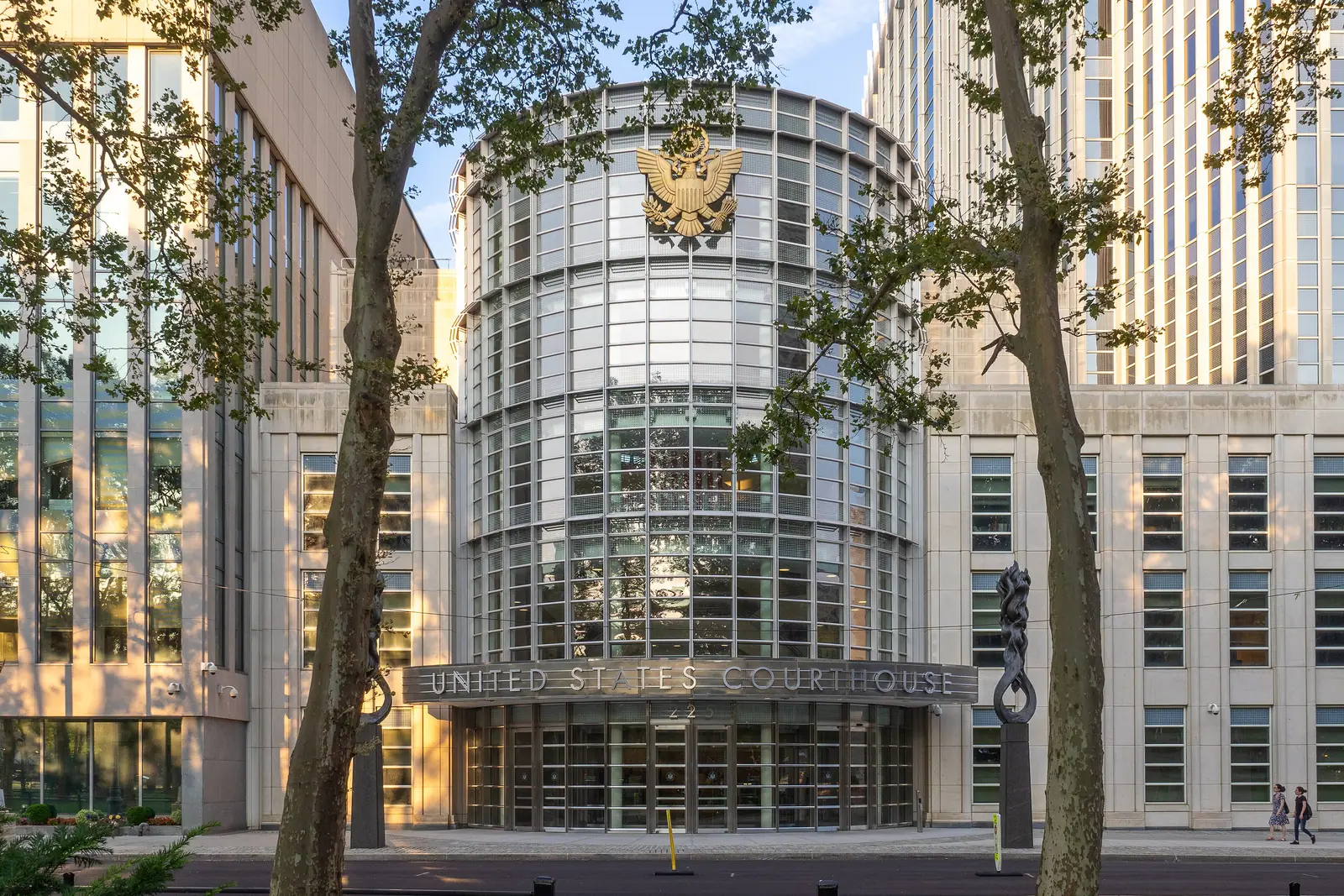
- A federal jury in Brooklyn found Huawei guilty on 10 of 12 counts on 24 November 2026, including bank fraud and conspiracy to steal trade secrets.
- Jurors acquitted the company of racketeering conspiracy, the gravest charge, and of conspiracy to obstruct justice.
- Huawei says the charges it was convicted on have no legal or factual merit and promises to take all necessary legal actions.
- Between 2010 and 2014, about $100 million of transactions by Skycom, which Huawei controlled, passed through the United States via one bank, according to the Justice Department.
- No sentencing date has been reported: filings ahead of it start in the third week of January, according to the South China Morning Post.
A federal jury in Brooklyn, New York, has found Huawei guilty on 10 of the 12 criminal counts the Chinese company faced, Reuters (opens in a new tab) reports. The verdict, on Tuesday 24 November, covers bank fraud, wire fraud and a conspiracy to steal trade secrets.
Jurors cleared it of the gravest charge, conspiring to operate as a criminal enterprise. No sentence or fine has been set. Huawei rejects the convictions.
What the jury decided
Huawei was convicted of bank fraud and wire fraud, according to NBC News (opens in a new tab). The list also includes several conspiracies: to commit those frauds, to launder money, to defraud the United States and to steal trade secrets. Courthouse News (opens in a new tab) adds conspiracy to violate IEEPA, the emergency economic powers law used for the sanctions on Iran.
Jurors acquitted on two counts: racketeering conspiracy and conspiracy to obstruct justice. The first rests on the American RICO statute. To accept it, they had to conclude that Huawei behaved like a criminal enterprise, the BBC (opens in a new tab) explains.
The trial, before Judge Ann Donnelly, began on 8 September with jury selection. Prosecutors called more than 60 witnesses and the defence 15. Three companies linked to the group stood trial alongside the parent. Deliberations opened on the afternoon of 18 November.
Trade secrets, from Cisco to a T-Mobile robot
Prosecutors described two decades of taking American technology. Reuters says they tried to show that Huawei stole Cisco source code for its own routers, and antenna technology from Quintel. They also alleged that it hired a professor to reach a circuit board made by CNEX. The Associated Press (opens in a new tab), citing court records, lists Motorola Solutions among the victims too.
One centrepiece was a video recorded by T-Mobile, the South China Morning Post (opens in a new tab) says. Prosecutors say it shows a Huawei engineer putting part of Tappy, a robot that tested phones, into his backpack. The engineer called it a mistake and said he returned the part the next day; Huawei dismissed him. Jurors also heard about a Huawei engineer who slipped onto Fujitsu’s stand at a trade fair to photograph equipment, according to Reuters.
The defence answered that these were isolated acts in a company with more than 200,000 employees. Lawyer Brian Heberlig said employees found at fault were reprimanded or dismissed. He added that Huawei had paid billions of dollars in licence fees, 75% of them to US companies. “You can’t steal a secret that isn’t a secret,” he said, quoted by AP.
Iran, the banks and Meng Wanzhou’s admission
The other part of the case is financial. Prosecutors say Huawei hid from banks that it controlled Skycom, a Hong Kong company that worked mostly in Iran. That, they argue, let it move dollars through the American financial system despite sanctions. They also accused it of lying about business in North Korea and of providing Iran with equipment to follow protesters in 2009, Reuters (opens in a new tab) recalled in September. Huawei pleaded not guilty to every charge.
Meng Wanzhou, chief financial officer and daughter of the founder, conceded part of this in 2021. In her agreement with US prosecutors (opens in a new tab), she accepted that she had presented Skycom to a bank as a partner when Huawei in fact controlled it. Between 2010 and 2014, the Justice Department says, Skycom put about $100 million of transactions through that bank and through the United States. At least some supported work in Iran, in breach of US law. Reuters identifies the bank as HSBC.
Jurors were given the statement annexed to the agreement. Meng did not testify, but an HSBC banker who met her in 2013 did. The defence argued that the banks knew about the Iranian business and were competing to have Huawei as a client, according to Reuters. The charges against Meng were dropped.
Huawei’s response and Beijing’s position
Huawei said the acquittal “confirms that these allegations lack factual basis”, according to the BBC. The charges it was convicted on, it says, have no legal or factual merit; it promises to take “all necessary legal actions”, NBC quotes it as saying. It also argues that the five trade secrets episodes were civil disputes settled over the past two decades. No court, it adds, had held it liable for deliberate misuse of intellectual property.
The Justice Department did not immediately answer the Wall Street Journal (opens in a new tab). The paper notes that the verdict comes shortly after Donald Trump’s summit with Xi Jinping in Shenzhen, Huawei’s home city. In September, a spokesman for China’s foreign ministry said Beijing opposed what it called US suppression of Chinese businesses, the South China Morning Post recalls.
What already restricts Huawei in the US, Europe and Portugal
The May 2019 rule (opens in a new tab) that put Huawei and 68 affiliates outside the US on the Entity List cited this very case as an example of why. The list limits exports of American technology; Washington added an Alibaba unit to it this week. None of the charges the Justice Department listed in 2019 (opens in a new tab) and 2020 (opens in a new tab) is for spying on behalf of a state.
The effect on the business is unclear, AP says. Huawei has been barred for years from selling equipment to US carriers, but it still sells strongly elsewhere and has moved into making chips as artificial intelligence drives demand. It reported 2025 revenue of 880.9 billion yuan, about $126 billion as converted by the South China Morning Post.
In January the European Commission proposed giving mobile operators 36 months to remove equipment from high-risk suppliers. In September governments took that deadline out of the text, which still had to be negotiated with the European Parliament, Reuters (opens in a new tab) reported.
In Portugal, the government decided to renew its 2023 restrictions on “high-risk” 5G suppliers, the business daily ECO reported in October, as cited by the news agency Lusa (opens in a new tab). The original decision does not name Huawei but leaves it out in practice. On 18 November Beijing criticised the restrictions and asked for a fair environment for Chinese companies.
What is still unknown
No sentencing date has been reported. Filings by the two sides ahead of it start in the third week of January, according to the South China Morning Post. The company faces financial penalties and possibly oversight ordered by the court, the Wall Street Journal writes.
The size of the penalty is also undecided. In September, with the gravest charge still in play, law professor Todd Haugh told Reuters it could run from hundreds of millions to billions of dollars. It depends, he said, on the benefit obtained and on the seriousness of the conduct. In the event of a conviction, prosecutors also planned to seek the forfeiture of illegal gains.
Reports of the verdict do not give the full list of the 10 convictions or say which episodes persuaded the jurors. The statements Huawei has released speak of legal action without mentioning an appeal.
Sources
Documents and reporting consulted for this story.
- China’s Huawei convicted in sprawling US criminal trial over Iran business (opens in a new tab)Reuters (via MSN), . Accessed 24 November 2026
- Chinese tech giant Huawei guilty of conspiracy to steal trade secrets, U.S. jury finds (opens in a new tab)Associated Press (via TribLive), . Accessed 24 November 2026
- Huawei found guilty of stealing trade secrets but acquitted of racketeering (opens in a new tab)BBC, . Accessed 24 November 2026
- Chinese tech company Huawei convicted on federal charges (opens in a new tab)NBC News, . Accessed 24 November 2026
- Huawei found guilty of stealing trade secrets in US trial (opens in a new tab)Courthouse News Service, . Accessed 24 November 2026
- Huawei guilty on 10 of 12 counts after 2-month battle in US courtroom (opens in a new tab)South China Morning Post (via MSN), . Accessed 24 November 2026
- China’s Huawei convicted of fraud in US criminal trial (opens in a new tab)The Wall Street Journal (via MSN), . Accessed 24 November 2026
- Huawei CFO Wanzhou Meng Admits to Misleading Global Financial Institution (opens in a new tab)Departamento de Justiça dos EUA, . Primary source. Accessed 24 November 2026
- Chinese Telecommunications Conglomerate Huawei and Subsidiaries Charged in Racketeering Conspiracy and Conspiracy to Steal Trade Secrets (opens in a new tab)Departamento de Justiça dos EUA, . Primary source. Accessed 24 November 2026
- Chinese Telecommunications Conglomerate Huawei and Huawei CFO Wanzhou Meng Charged With Financial Fraud (opens in a new tab)Departamento de Justiça dos EUA, . Primary source. Accessed 24 November 2026
- Addition of Entities to the Entity List (84 FR 22961) (opens in a new tab)Federal Register, . Primary source. Accessed 24 November 2026
- Huawei accused of supplying Tehran with surveillance tech (opens in a new tab)Reuters (via The Jerusalem Post), . Accessed 24 November 2026
- European telcos may get more time to phase out high-risk suppliers under EU proposal (opens in a new tab)Reuters (via The Star), . Accessed 24 November 2026
- China reage a restrições portuguesas à Huawei com críticas a politização (opens in a new tab)Lusa (via Notícias ao Minuto), . Accessed 24 November 2026
Topics

Written by
Wellinton OliveiraCEO of Lyntev
Technology with context, original analysis and sources you can consult.