Australia and Singapore pledge to cooperate on AI testing, with no deadlines or funding
The two prime ministers’ statement speaks of AI testing and assurance, international standards and trusted data flows. It sets no deadlines, funding or penalties.
Key points
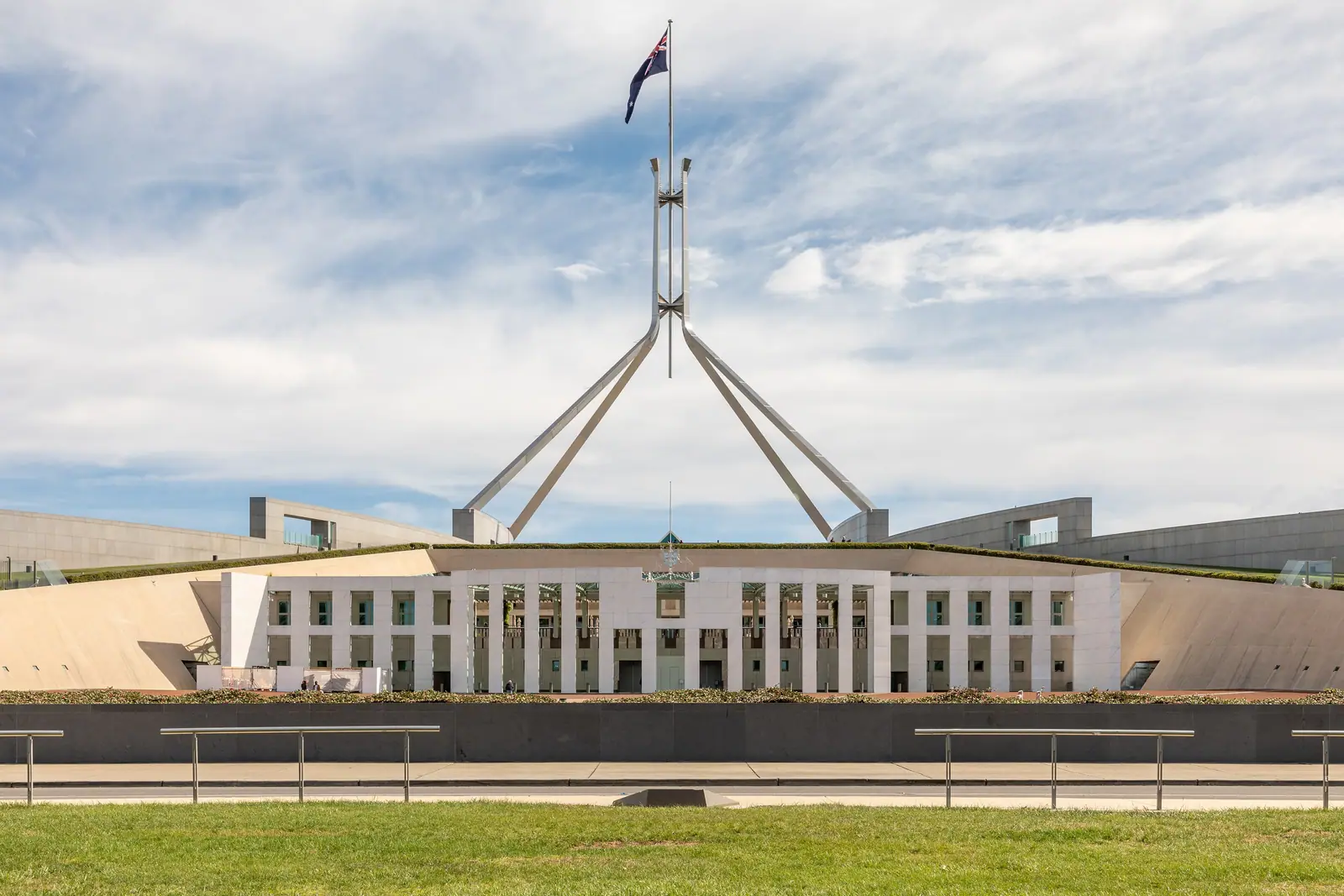
- The prime ministers of Australia, Anthony Albanese, and Singapore, Lawrence Wong, issued a joint statement in Canberra on 24 November on cooperation in AI and cybersecurity.
- The leaders agreed to exchange experience on AI testing, evaluation and assurance, and committed to exploring closer interoperability, including in cross-border data flows.
- They want to influence international standards, including through an international AI evaluation network, and to use Singapore’s 2027 chairmanship of ASEAN, the Association of Southeast Asian Nations, to advance testing standards.
- The text uses verbs such as “committed” and “explore” and sets no deadlines, funding or penalties; it does not mention the European Union or Portugal.
- A memorandum on essential supplies was signed the same day; according to the Portuguese news agency Lusa, Singapore supplies about 55% of the petrol Australia consumes.
Australia and Singapore pledged on 24 November to work together on the testing and security of artificial intelligence (AI) systems and on cybersecurity. The pledge comes in a statement by the two prime ministers, published by the Australian prime minister’s office (opens in a new tab). The text lists areas of cooperation but sets no deadlines, funding or penalties: its verbs are “committed”, “agreed to deepen” and “explore”.
What was agreed, and where
The statement was issued at the 11th annual leaders’ meeting between the two countries in Canberra, attended by prime ministers Anthony Albanese of Australia and Lawrence Wong of Singapore. It sits within the Comprehensive Strategic Partnership 2.0, the upgraded relationship between the two countries, and reaffirms two earlier instruments: the 2024 memorandum on AI cooperation and the cybersecurity memorandum, refreshed in 2026.
The leaders also welcomed the first dialogue between senior cyber and digital officials, held in July. The meeting’s overall statement (opens in a new tab) places everything within that partnership.
The Portuguese news agency Lusa (opens in a new tab) describes the commitment as an agreement to protect digital infrastructure and keep advanced systems under human control. The original wording is more cautious: AI should remain “under human direction, oversight and control”, and the leaders recognise the need to mitigate risks.
What the two countries plan to do
The text brings together four strands. The first is assessment: exchanges on AI testing, evaluation and assurance, and on workforce skills. The second is adoption: linking businesses, governments and research institutes to speed up use of the technology and turn innovation into commercial opportunities. The ambition is for both countries to become “trusted AI hubs” for the Indo-Pacific.
The third is infrastructure and data. The leaders pledged to look at closer interoperability (systems that can work together), among other things in digital infrastructure and the cross-border movement of data. They also recognised the importance of strengthening data governance, so as to protect privacy and security. The fourth is security: cooperating on emerging cyber and AI security challenges. The leaders also acknowledged the importance of safeguards and of preparing for AI-enabled threats.
International standards and local languages
Externally, the two countries want to help shape international AI standards through bodies like the International Network for Advanced AI Measurement, Evaluation and Science. Both also argue that the Indo-Pacific should have a voice in that debate. Singapore will chair ASEAN, the Association of Southeast Asian Nations, in 2027. The statement names that year as an opportunity to advance AI testing standards and methods within the ASEAN working group on AI governance.
There is also a cultural strand: sharing experience of multilingual AI that reflects local languages and priorities. The leaders also want to explore Pacific-led AI capabilities, building on what was learnt in creating SEA-LION and in schemes like Singapore’s Project Atlas. The text does not describe these projects.
Submarine cables, essential supplies and carbon: the rest of the meeting
The AI statement is one of several outcomes. In the overall statement, the leaders mention an action plan on cyber operations, protection of submarine cables and the Digital Economy Agreement between the two countries.
They also welcome the signing that day of a memorandum on essential supplies, which follows a protocol of 27 July, and the signing of an agreement on moving carbon dioxide across borders for storage under the seabed. According to Lusa, Singapore supplies about 55% of the petrol Australia consumes, plus 15% of its diesel and 23% of its aviation fuel.
On the same day, the Australian government struck a deal with the Greens to get a law through the Senate that provides for fines of up to 5% of global revenue for platforms. That is a separate matter, of domestic regulation, and the AI statement does not mention it.
What changes and what is still unknown
For readers in Portugal or elsewhere in Europe there is no direct effect: the statement does not mention the European Union or Portugal and creates no rules for companies. The text favours testing and assurance of systems, shared standards and trusted data flows, with no bans or obligations on businesses.
What remains unknown is what will come of it in practice: which projects, which institutions and what dates. The text does not say whether there is funding, or when the exchanges on testing and evaluation will take place. Cooperation within ASEAN is tied to Singapore’s 2027 chairmanship.
Corrections
. The text presented stronger data governance, safeguards and preparation for AI-enabled threats as commitments; the statement only recognises their importance. What is to be turned into commercial opportunities is innovation, not research. The Portuguese and Spanish editions spoke of cybersecurity operations; the action plan is on cyber operations.
Sources
Documents and reporting consulted for this story.
- Australia-Singapore Cooperation on Artificial Intelligence (opens in a new tab)Gabinete do primeiro-ministro da Austrália, . Primary source. Accessed 24 November 2026
- Australia-Singapore Annual Leaders' Meeting 2026 (opens in a new tab)Gabinete do primeiro-ministro da Austrália, . Primary source. Accessed 24 November 2026
- Austrália e Singapura unem esforços para regular e proteger sistemas de inteligência artificial (opens in a new tab)Lusa, via Observador, . Accessed 24 November 2026
Topics

Written by
Wellinton OliveiraCEO of Lyntev
Technology with context, original analysis and sources you can consult.