New York State bans the sale of AI chatbot toys for five years
Governor Kathy Hochul signed the law, which covers plush animals, dolls and robots that hold conversations and are meant for children aged 12 or younger. It starts only in February 2027, after Christmas shopping.
Key points
- Kathy Hochul signed on 24 November a law that bans making, distributing and selling AI chatbot toys in New York State for five years.
- The ban starts 90 days after signing, on 22 February 2027. The toys can stay on sale this Christmas.
- The law targets toys for children aged 12 or younger that contain an “AI companion”, a system that simulates a lasting relationship with the user.
- The attorney general can ask a court for civil penalties of up to $15,000 a day for each violation.
- California has had a similar law since September, for toys meant for children under 16. It starts on 1 January 2027.
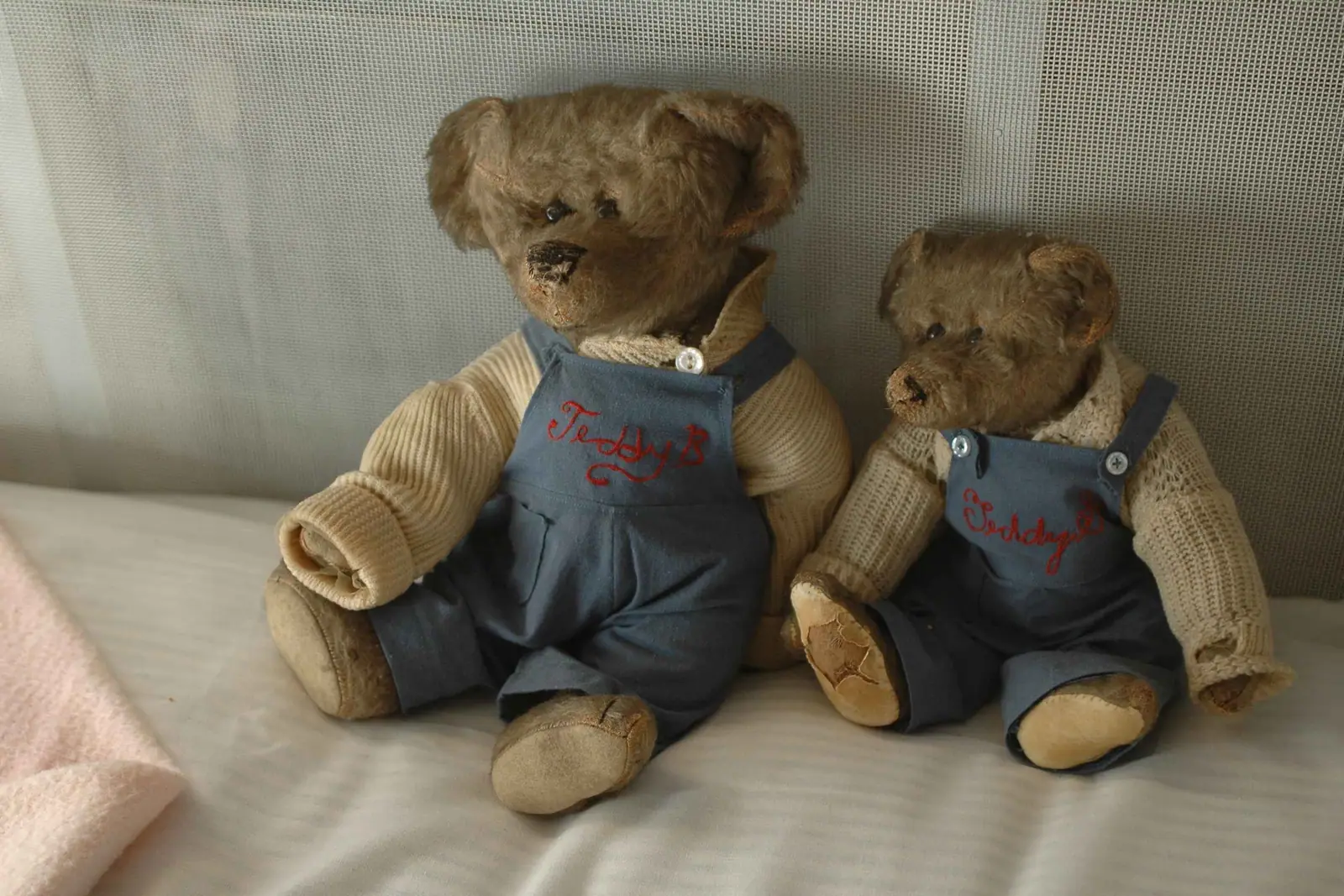
New York Governor Kathy Hochul on Tuesday 24 November signed a law that bans, for five years, the manufacture, distribution and sale in the state of toys with a built-in artificial intelligence (AI) chatbot. A chatbot is a program that holds a conversation by text or voice. The measure covers, for example, plush animals, dolls and robots that talk with children over the internet, according to the governor’s office (opens in a new tab).
The ban begins only 90 days after signing, on 22 February 2027, the date the Toy Association (opens in a new tab), a toy industry body, has given companies. These toys can therefore stay on sale this Christmas.
What the law bans
The bill is numbered S.9408A in the state Senate and A.11144B in the Assembly. It adds an article to New York’s General Business Law and bars any person or company from making, exchanging, holding for sale, distributing or selling a “chatbot toy” in New York. The Senate (opens in a new tab) and Assembly (opens in a new tab) texts share the same wording.
Not every AI toy is caught. The law targets a children’s toy with an “AI companion” embedded in it or integrated with it. State law already defined the term (opens in a new tab): a system designed to simulate a lasting human, or human-like, relationship with the user.
The definition combines three traits. The system keeps information from earlier conversations to personalise the exchange. It asks, unprompted, questions about emotions. And it sustains a dialogue about the user’s personal matters.
Systems used only for customer service do not count as AI companions, nor do those built mainly for efficiency, research or technical assistance, or for a company’s internal use. The press release speaks of internet-connected toys, but the text of the law sets no such condition.
Which ages it covers
The text sets no age of its own. It borrows the federal definition of a children’s toy (opens in a new tab): a product the manufacturer designs or intends for play by a child aged 12 or younger.
The manufacturer’s word does not settle the matter. The federal rule also looks at packaging and advertising, at how consumers commonly see the product and at age guidelines from the federal product safety commission.
When it starts and how long it lasts
The act takes effect on the ninetieth day after becoming law and expires five years later. Counted from 22 February 2027, those five years end in February 2032.
Because the measure will not arrive in time for Christmas, Hochul urged parents and carers to check, before buying, whether a toy has an AI companion, what information it gathers and whether it allows open-ended conversation with a child.
Fines of up to $15,000 a day
Enforcement falls to the state attorney general, Letitia James. Her office can ask a court to stop an operator and seek civil penalties of up to $15,000 a day for each violation. If the court finds a violation, nobody has to prove that a person was harmed.
An operator is anyone who runs or provides an AI companion in a children’s toy. The ban reaches those who make and those who sell, yet the enforcement section mentions only operators.
James said her office would not hesitate to enforce the law and that children’s health would not become the “collateral damage of big tech”.
Why it was passed
The press release cites tests by a national consumer watchdog on a sample of chatbot toys sold for children aged 3 to 12. It does not name the group. PIX11 (opens in a new tab) points to the Public Interest Research Group.
According to the governor’s office, some toys went into detail on sexually explicit subjects, suggested where matches were likely to be found at home and behaved as if upset when a child had to go. Parental controls were few or absent, and safety limits weakened as the conversation lengthened. Some toys were able to record the child’s voice or scan the child’s face.
State Senator Andrew Gounardes, who sponsored the bill, said the pause gives time to study how the toys affect children and to create protections. Assemblymember Rebecca Kassay, who introduced the bill in the Assembly, noted nearly unanimous support in both chambers.
Industry wanted a study instead
The Toy Association says it has consistently opposed moratoriums and favours studying the issue to ensure children’s safety. According to the association, legislation under discussion at federal level was changed, after talks with it, to provide for a study rather than a ban.
In March Tech:NYC, a technology industry group, argued in a Route Fifty (opens in a new tab) article that the state should begin with a comprehensive data privacy law.
California has had a similar law since September
California Governor Gavin Newsom signed SB 867 (opens in a new tab) on 10 September. The Transparency Coalition, which backed the law, described it (opens in a new tab) as the first ban of its kind in the United States. The ages and dates in the California column are those summarised by the Toy Association (opens in a new tab).
| New York | California | |
|---|---|---|
| Signed | 24 November 2026 | 10 September 2026 |
| Age the toy is meant for | 12 or younger | under 16 |
| Start | 22 February 2027 | 1 January 2027 |
| End | February 2032 | 1 January 2031 |
In New York, the bill was introduced in the Senate on 10 March and cleared both chambers in June. On 28 October, Hochul signed another law, which bars unsafe chatbot features for minors, such as pretending to be human or encouraging self-harm. That one takes effect on 1 June 2027, according to News10 (opens in a new tab).
What is still unknown
The press release gives no list of brands or models. Nor does the text of the law mention possession or use by families who already own one of these toys.
How the ban will be policed is also unclear. FOX 5 (opens in a new tab) reported that it was not immediately known whether, or in what way, shops would be inspected. The Toy Association promises its members guidance once it is available.
Sources
Documents and reporting consulted for this story.
- As Consumers Begin Their Holiday Shopping Season, Governor Hochul Signs Five-Year Ban on AI Chatbot Toys (opens in a new tab)Gabinete da governadora de Nova Iorque, . Primary source. Accessed 24 November 2026
- S.9408-A: An act to amend the general business law, in relation to prohibiting the manufacture and sale of chatbot toys (opens in a new tab)Senado do Estado de Nova Iorque, . Primary source. Accessed 24 November 2026
- A.11144-B: An act to amend the general business law, in relation to prohibiting the manufacture and sale of chatbot toys (opens in a new tab)Assembleia do Estado de Nova Iorque, . Primary source. Accessed 24 November 2026
- N.Y. General Business Law Section 1700: Definitions (opens in a new tab)Public.Law. Primary source. Accessed 24 November 2026
- 15 U.S. Code § 2057c (opens in a new tab)Cornell Legal Information Institute. Primary source. Accessed 24 November 2026
- New York Governor Signs AI Chatbot Toy Bill into Law (opens in a new tab)The Toy Association, . Accessed 24 November 2026
- California Governor Signs AI Toy & Chatbot Bills into Law (opens in a new tab)The Toy Association, . Accessed 24 November 2026
- Governor Newsom signs the strongest child safety chatbot and social media laws in the nation (opens in a new tab)Governador da Califórnia, . Primary source. Accessed 24 November 2026
- Safety concerns lead California to halt chatbot toy sales, enact four-year moratorium (opens in a new tab)Transparency Coalition, . Accessed 24 November 2026
- New York lawmaker wants moratorium on sale of AI chatbot-enabled kids’ toys (opens in a new tab)Route Fifty, . Accessed 24 November 2026
- Got an baby monitor or a kid using ChatGPT? Two new laws in New York change the rules for teens and big tech (opens in a new tab)News10 (Nexstar), . Accessed 24 November 2026
- AI chatbot toys temporarily banned in NY: Gov. Hochul (opens in a new tab)PIX11, . Accessed 24 November 2026
- Hochul signs 5-year ban on AI chatbot toys in New York, warns holiday shoppers of 90-day delay (opens in a new tab)FOX 5 New York, . Accessed 24 November 2026
Topics

Written by
Wellinton OliveiraCEO of Lyntev
Technology with context, original analysis and sources you can consult.