
Cloudflare releases Clairic model weights for document data extraction
Clairic and Clairic-flash have published repositories and a hosted offering on Workers AI. Interfaces and limits need to be checked before documents are connected to a business process.
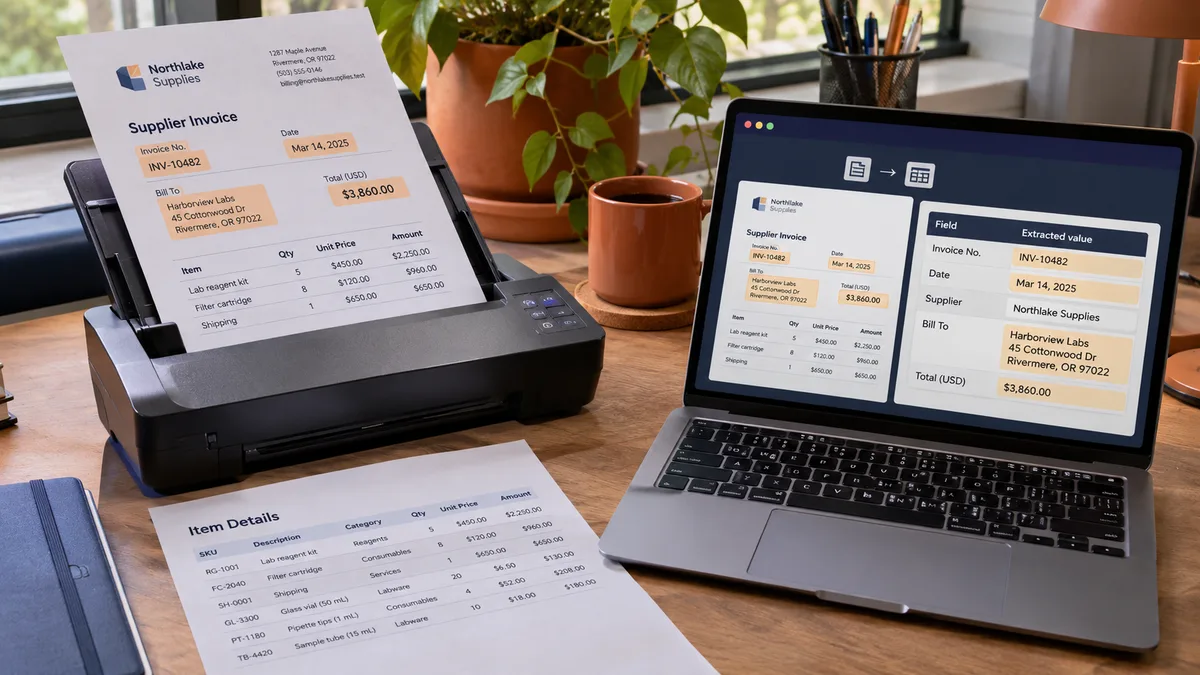
On 18 November 2026, Cloudflare announced an update to Clairic and the release of Clairic-flash, two models focused on extracting information. The vendor’s announcement states that they are available on Workers AI and that their weights have been published on Hugging Face. The Clairic and Clairic-flash repositories were accessible when checked on 21 November; both model cards identify the licence as Apache-2.0.
The document and the interface are both part of the choice
The announcement includes extraction from images and PDFs. The repository model cards document a Python helper with inputs for text, images and PDF documents. They also specify a combined limit of four images or PDF pages. This identifies a documented interface for those formats; it does not establish that every PDF, of any size, will be accepted.
The Clairic documentation on Workers AI describes documents[] for embedded PDFs: up to 4 MiB per file, with a combined maximum of four rendered pages and images. Encrypted PDFs are rejected. The model remains in preview. This is documented support; we have not tested the endpoint.
Cloudflare reports improvements in extraction and performance results from its own tests. We have not run those tests or checked accuracy or speed in a business process. Published weights and a licence statement on the model cards do not mean that hosted execution is free or that the applicable terms no longer need to be checked.
Lyntev analysis: start with the fields that must be correct
Before trying a model, it is worth writing down the expected result. Using a fictional invoice, for example, a team can identify the supplier, date and total, including a version in which one of those details is missing. The aim is to observe whether the result preserves what the document contains and makes the missing information clear.
That preparation helps distinguish three situations: a value read from the document, a calculated value and an estimate. The models’ specified interfaces distinguish response types and provide confidence indicators. A business should define which fields require checking and what happens when a response is incomplete, rather than treating a model indicator as approval of the operation.
The next decision concerns the process: who reviews the result, where the original document is kept and what action may follow validation. Starting with fictional documents allows that journey to be assessed before deciding which business information may be sent to the chosen solution. This is a proposed evaluation approach, not a result demonstrated in this article.
Further reading to prepare the evaluation
- How to extract data from documents with AI and check the result.
- How to test a system before accepting delivery.
- Related commercial service from Lyntev: process automation, for defining inputs, responsibilities and exception handling. The announcement does not establish a Lyntev integration with these models.
Sources and scope
Cloudflare’s article documents the announcement; the official Hugging Face model cards confirm the repositories and describe the Python helper and the stated licence; and the Workers AI documentation defines the scope of the hosted interface consulted. The announcement is dated 18 November; the pages were checked on 21 November 2026. We did not carry out our own test of the models.
Sources consulted
- Clairic extraction model announcementCloudflare. Date stated by the source: . Accessed: .
- Official Clairic model cardCloudflare on Hugging Face. Accessed: .
- Official Clairic-flash model cardCloudflare on Hugging Face. Accessed: .
- Clairic hosted interface documentation on Workers AICloudflare. Accessed: .